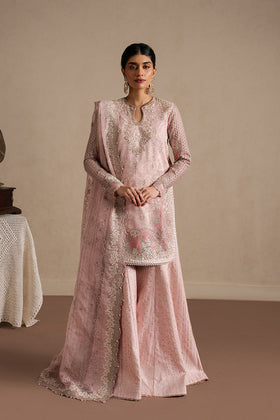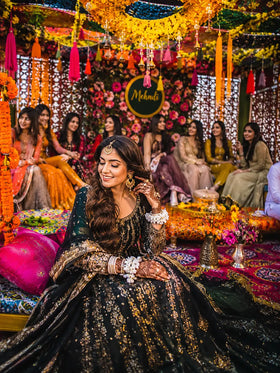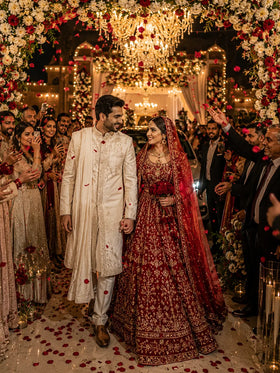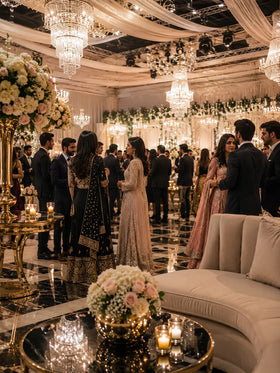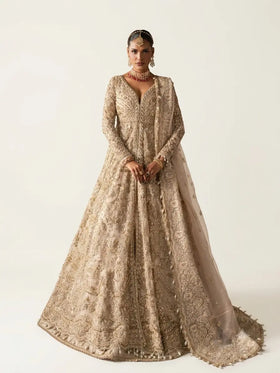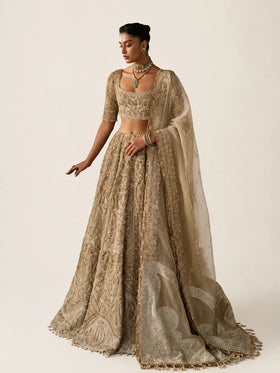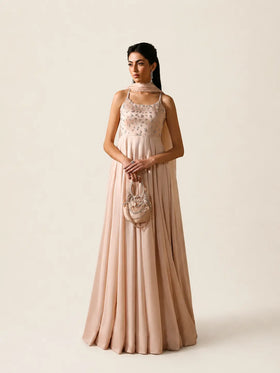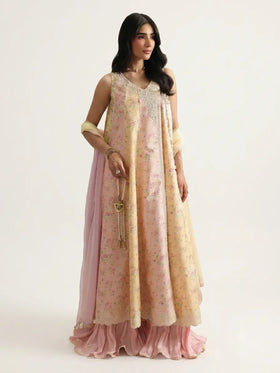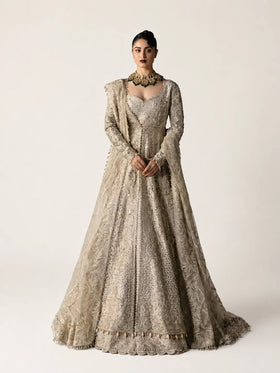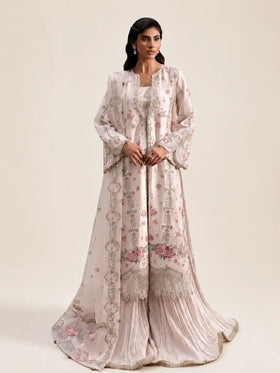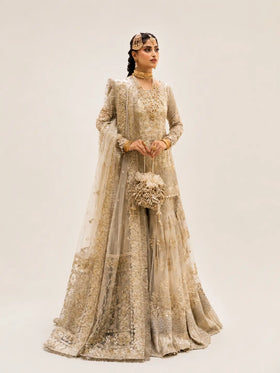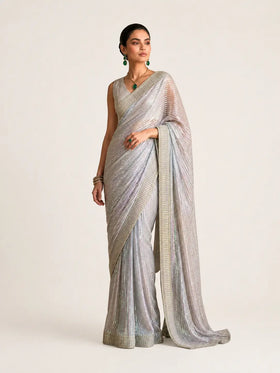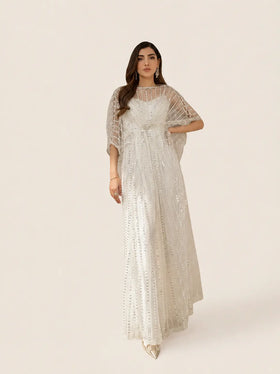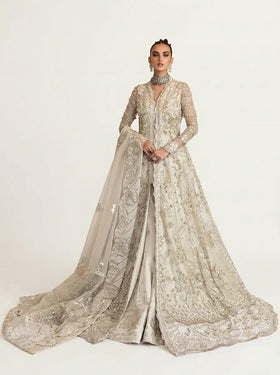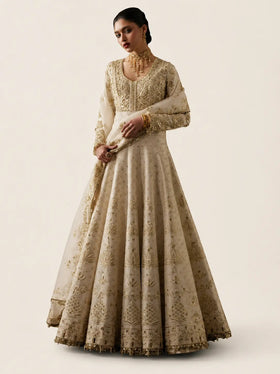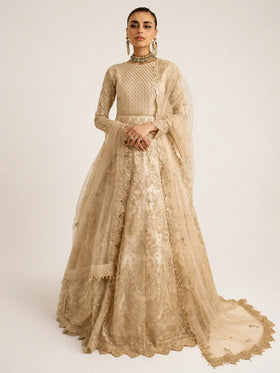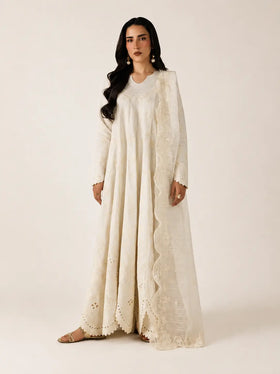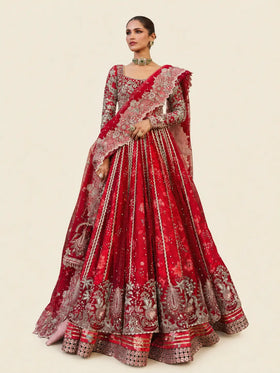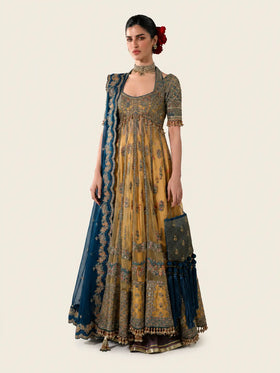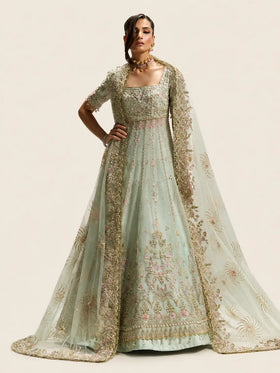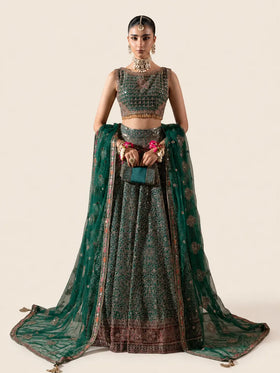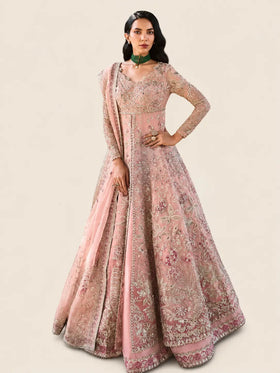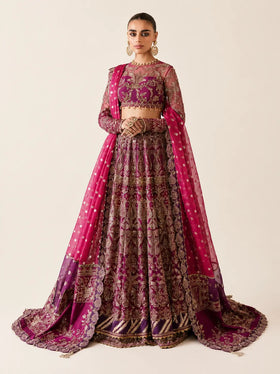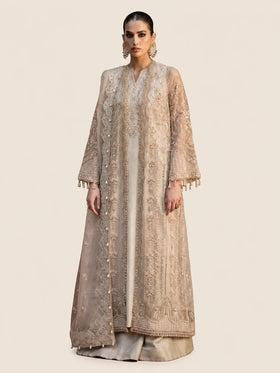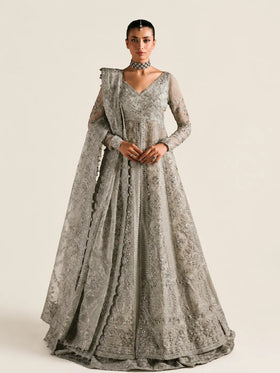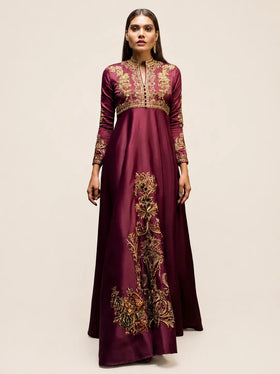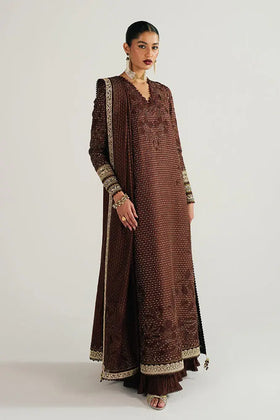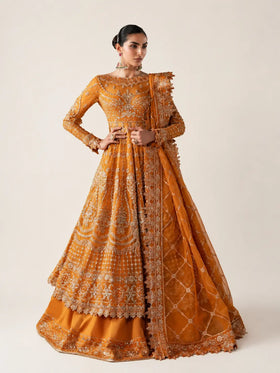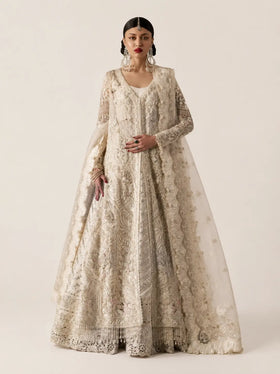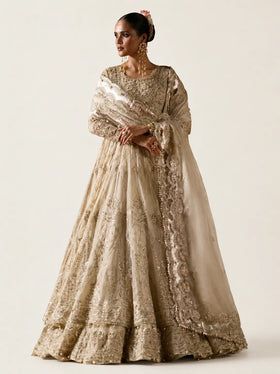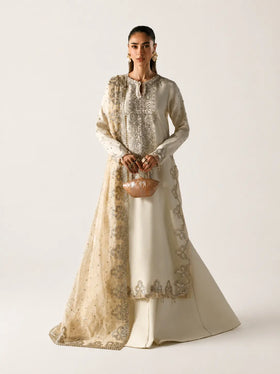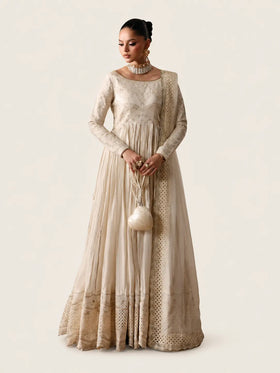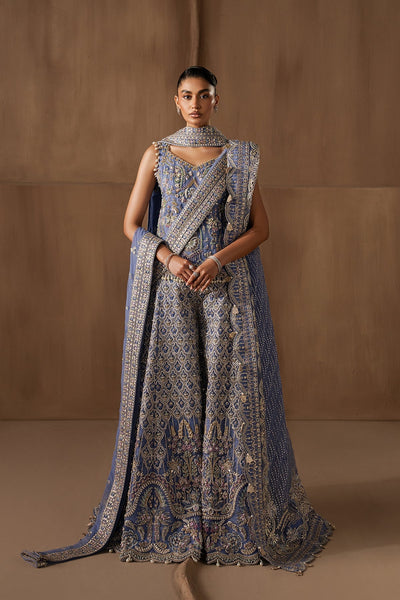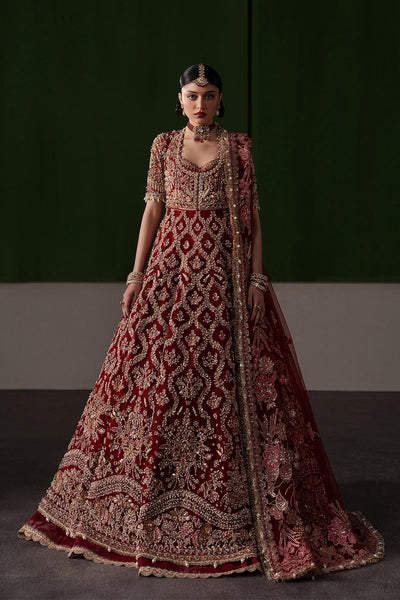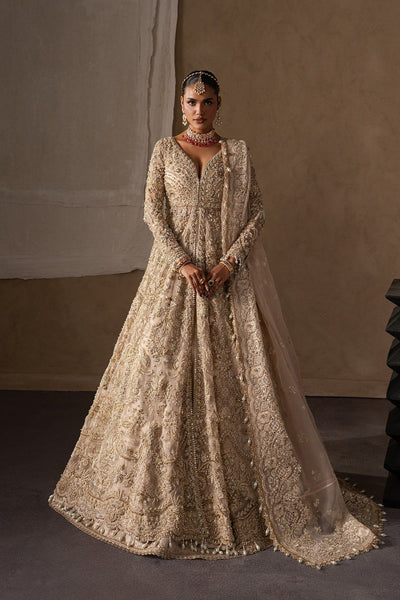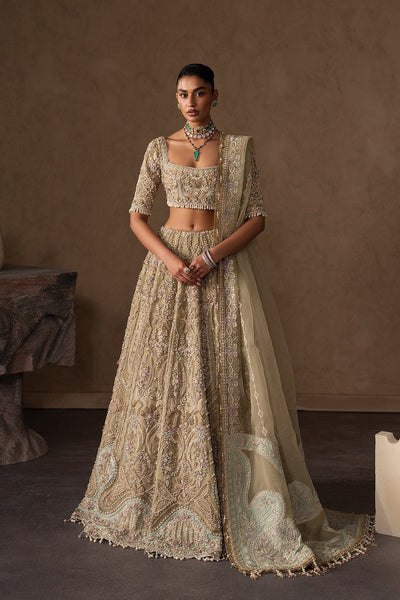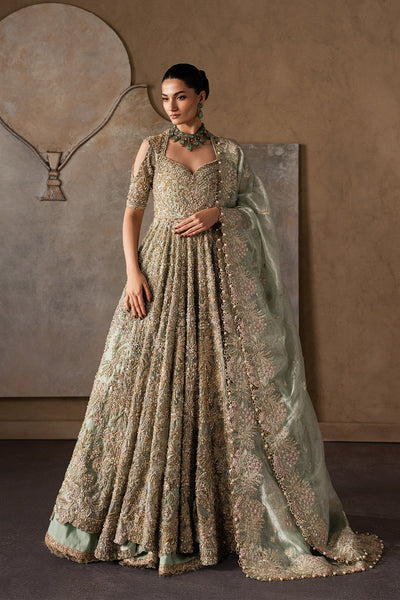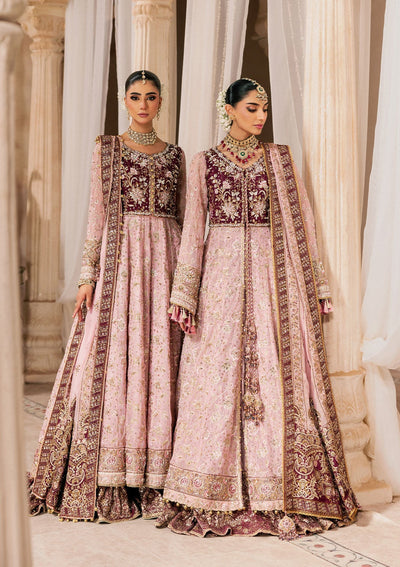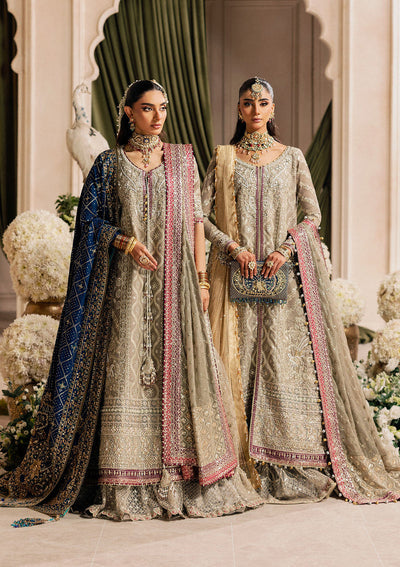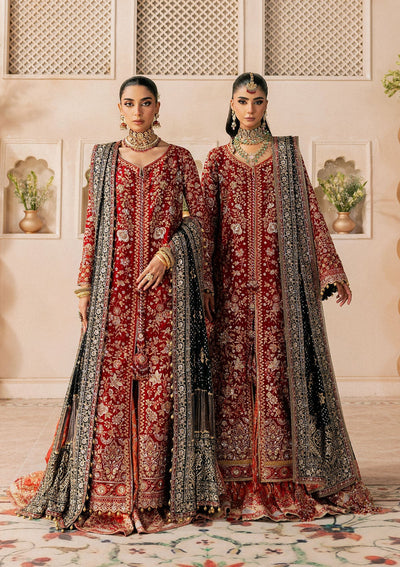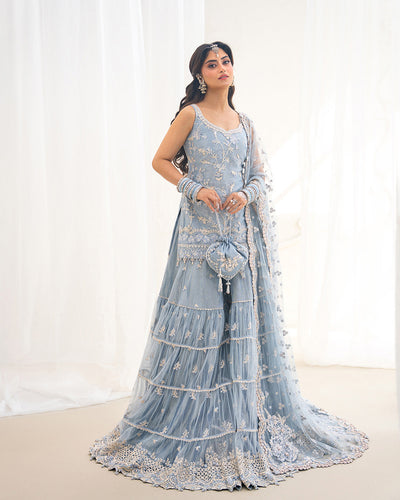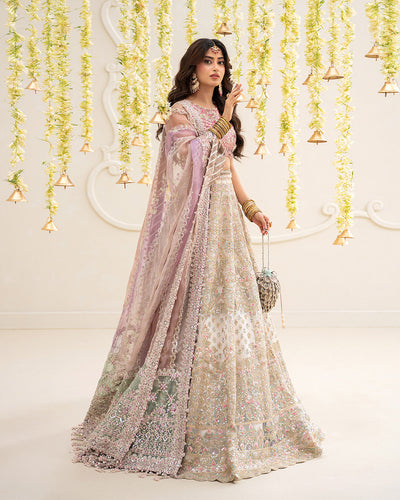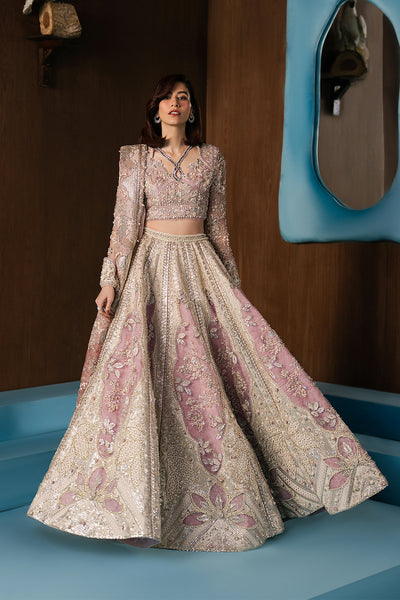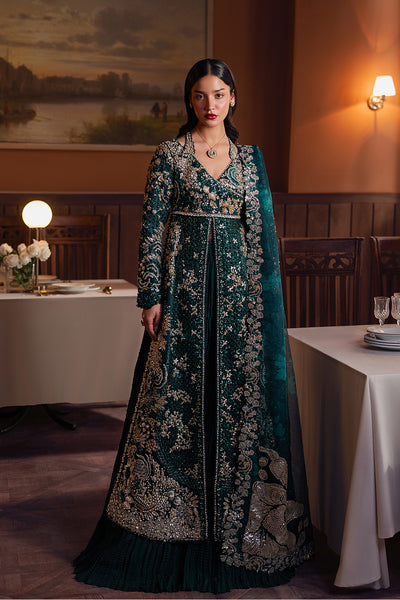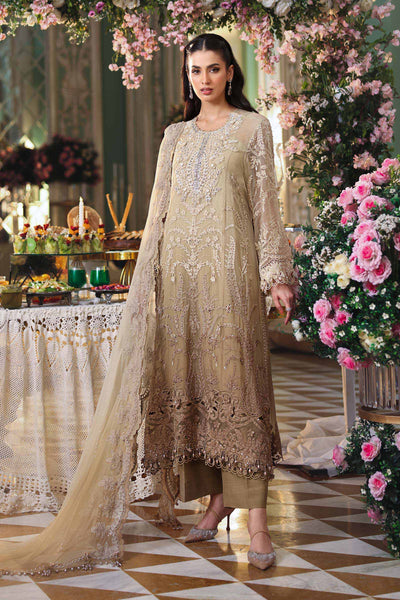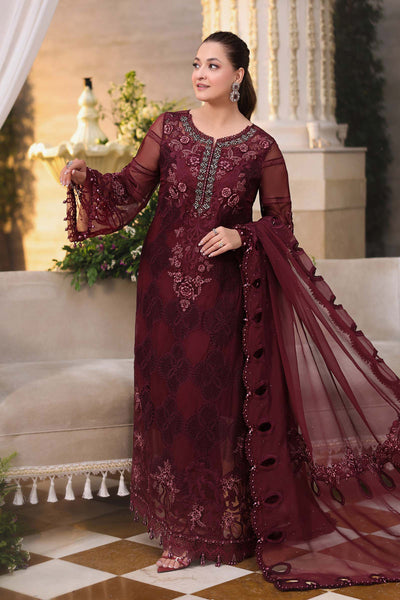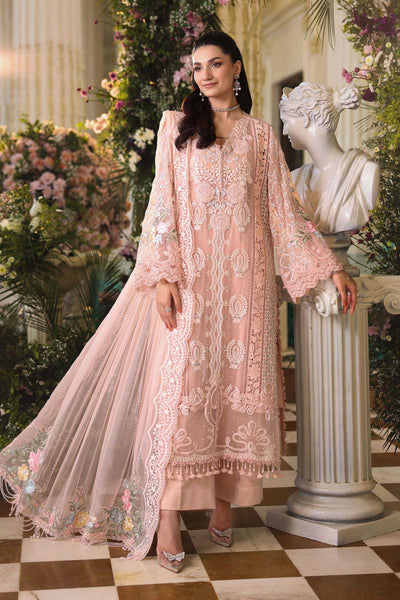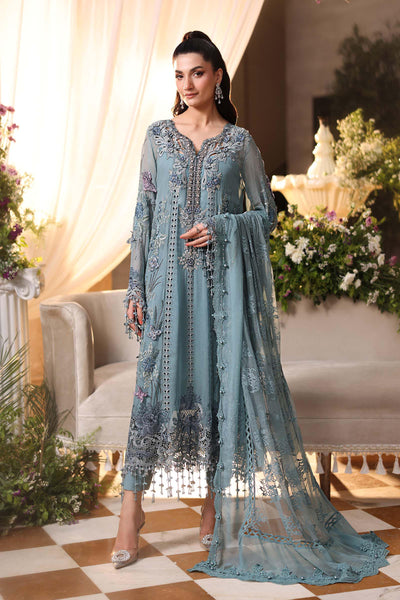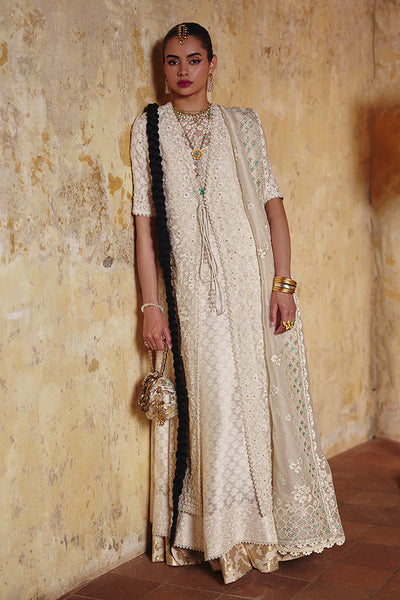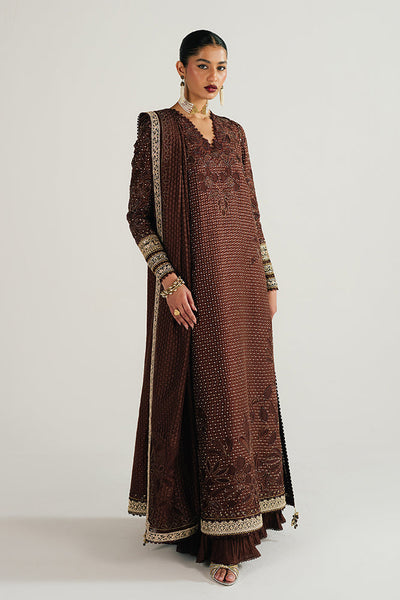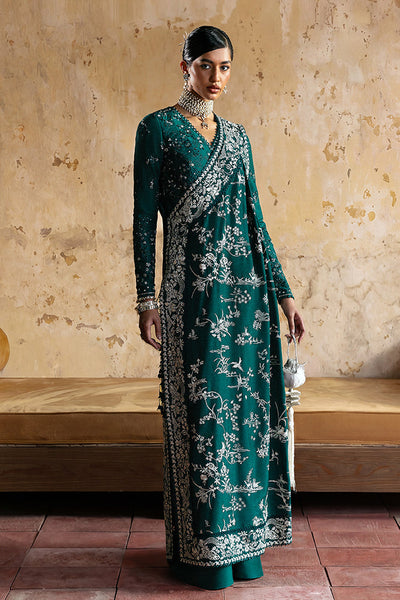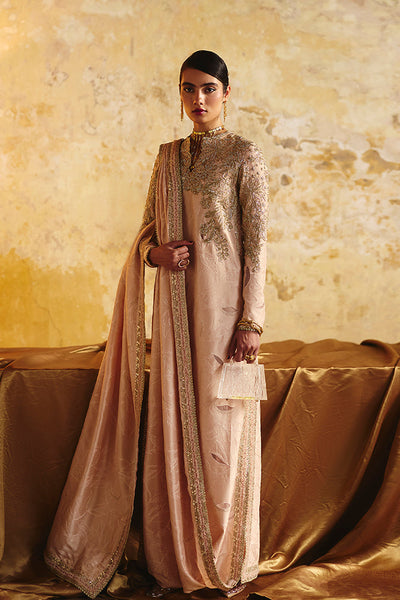





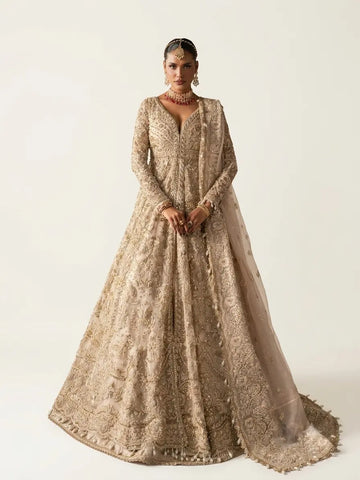
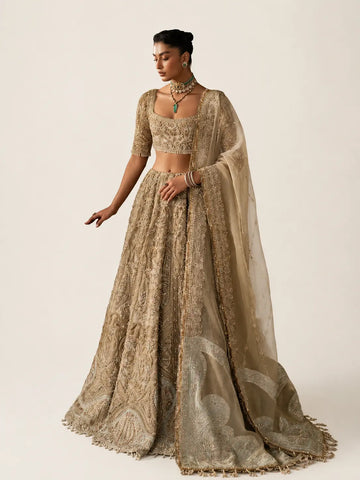
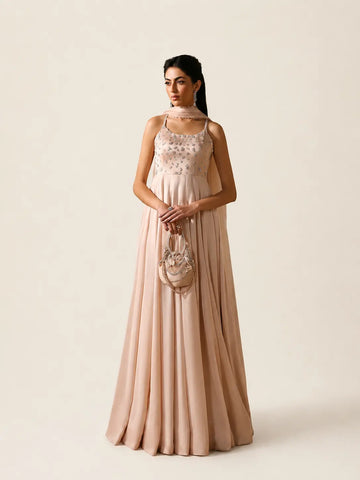
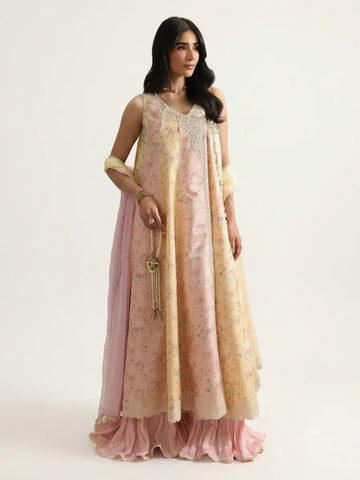


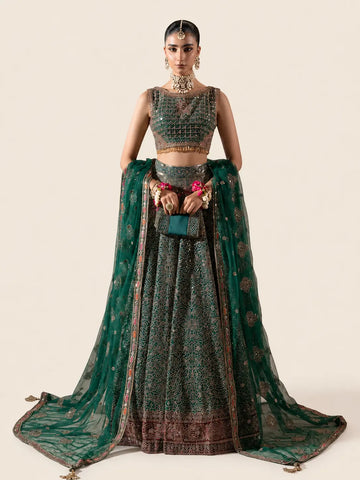
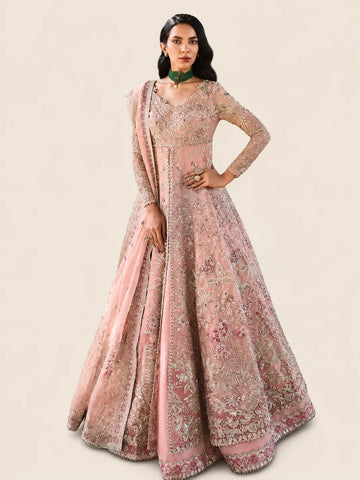
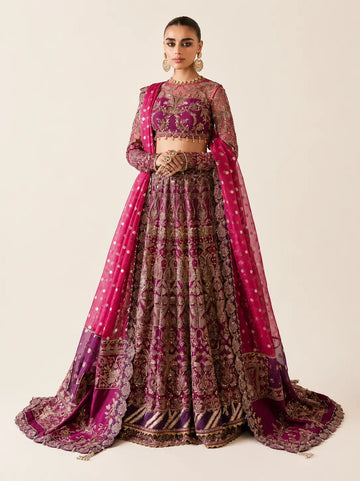
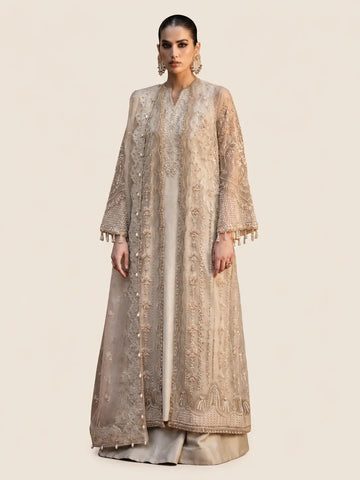
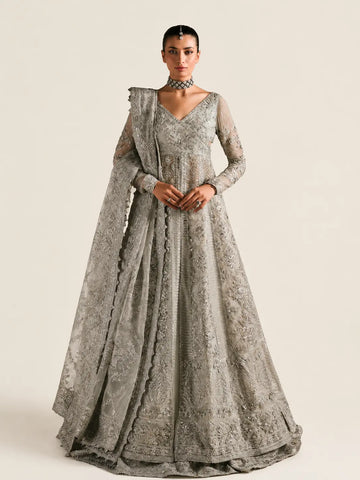
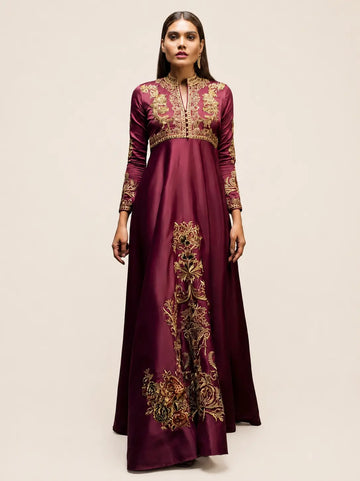
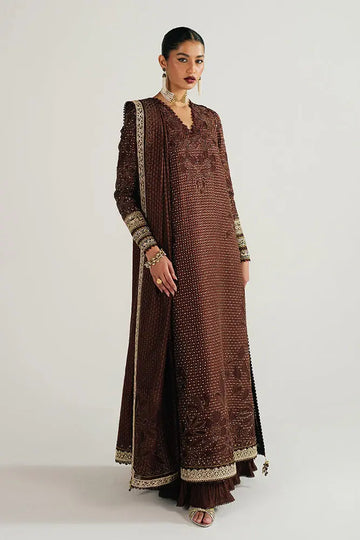
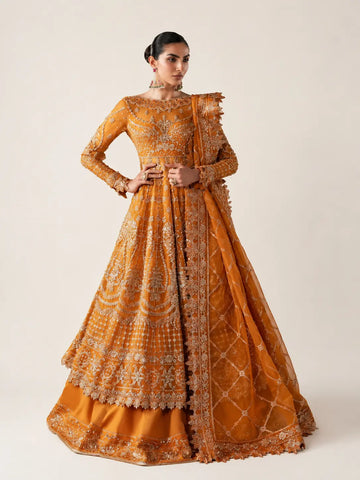
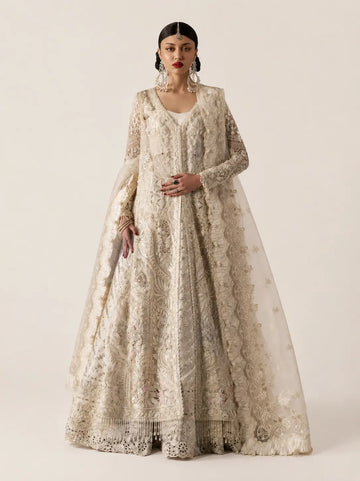
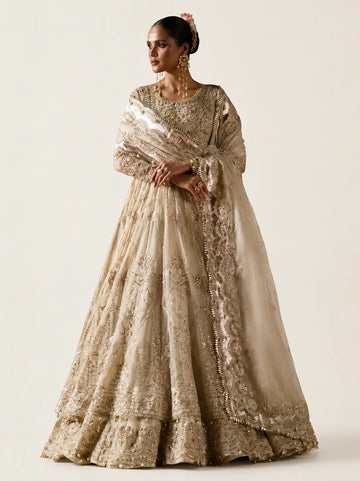
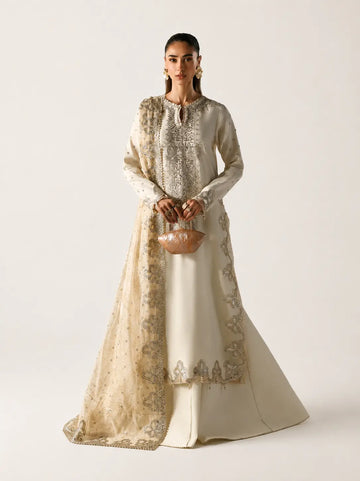
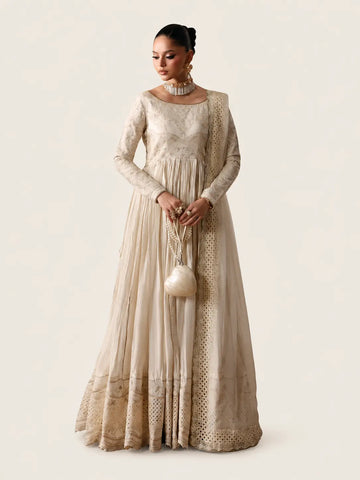
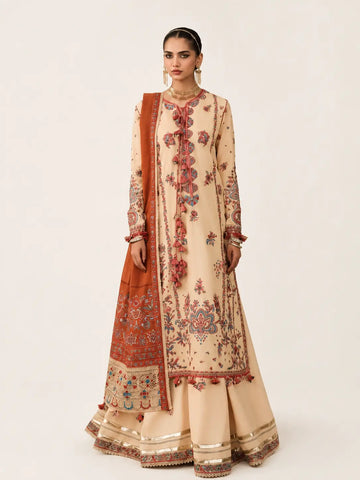
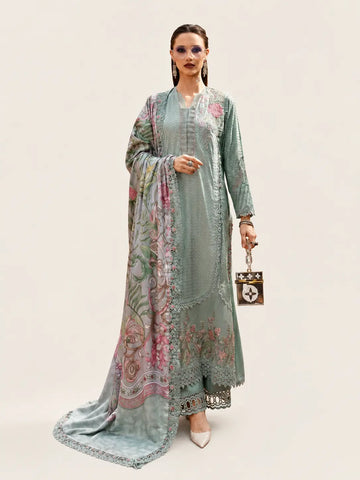
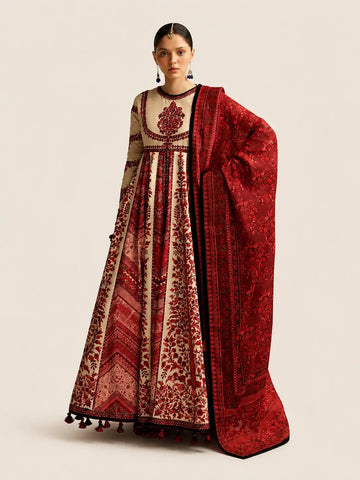
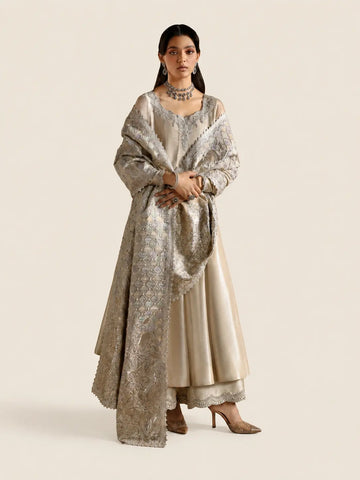
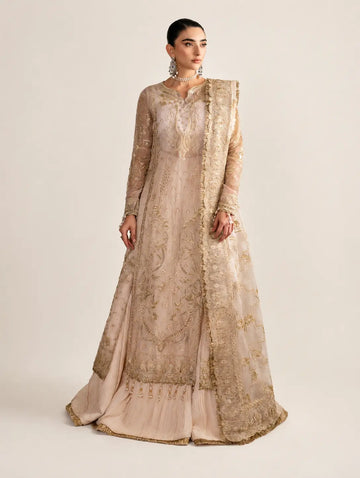
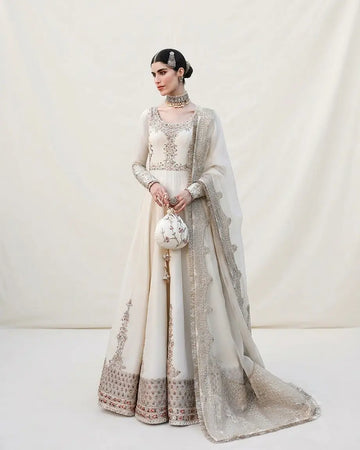
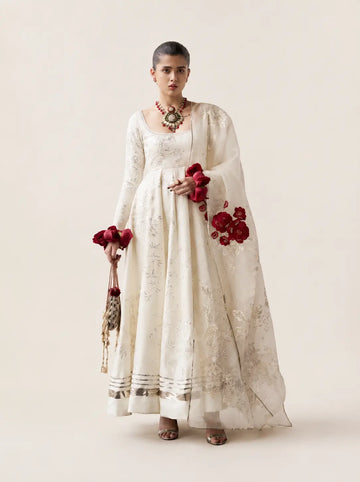
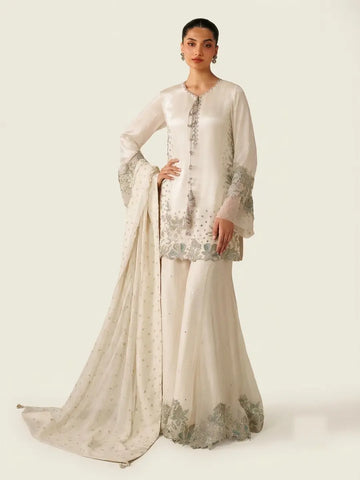
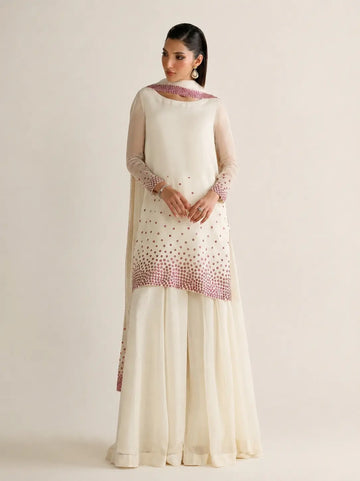
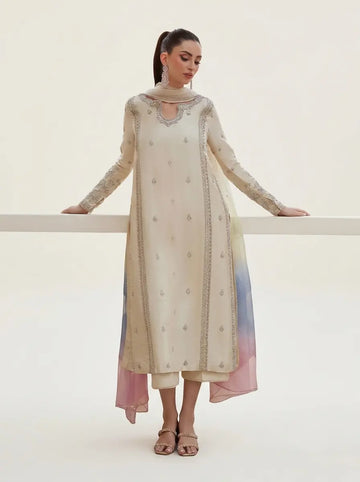
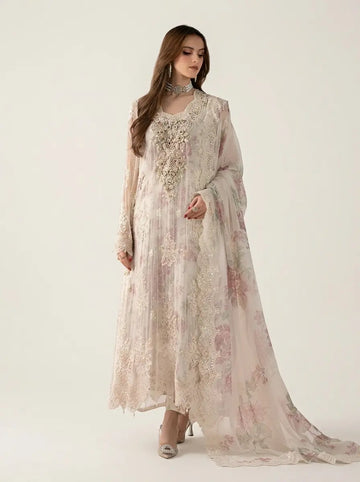

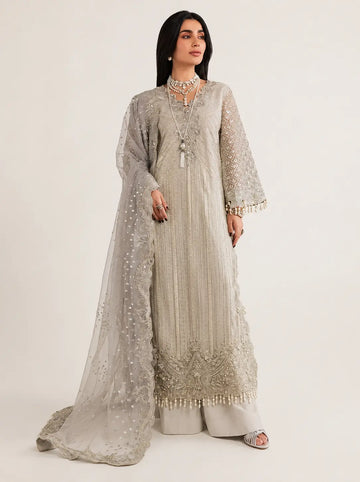
A UK Buyer's Guide to Real South Asian Silk
Posted on August 02 2026

Two numbers tell you whether a silk is worth its price, its grade and its momme weight. Learn to read them and you can judge any silk listing before you buy and catch a synthetic the moment it arrives. This guide decodes both, walks the seven silk types in Pakistani and Indian designer wear, and shares the measured momme figures from pieces we actually stock.
A few years ago I bought a "silk" kameez online that photographed beautifully. It arrived, and I knew within about ten seconds it wasn't silk. I held the fabric in my hand and it stayed cold — that faint, slippery chill that real silk simply doesn't have. It was a viscose blend. The listing had just said "silky."
That is the whole problem with buying silk online. You are trusting a photograph, and a good synthetic photographs almost identically to the real thing. The stakes are high because silk sits at the centre of South Asian dressing — bridal lehengas, formal shalwar kameez, the dupatta you keep for twenty years. And it is the fabric most often mislabelled and blended down, because the markup on calling polyester "silky" is enormous.
So this guide is built around the two numbers that actually pin down silk quality: grade and momme weight. Most shoppers have never been shown how to read either. Once you can, a silk listing stops being a gamble.
Beyond those two numbers, you will find the seven silk types you meet in Pakistani and Indian designer wear and what each is for, the tests that expose a synthetic on delivery, a full care protocol with UK-specific advice for hard water and damp, and — the part no other guide can give you — the momme weights we have actually measured on pieces in our own stock.
Why Silk Sits at the Heart of South Asian Luxury
Silk has been the fabric of ceremony and status across the subcontinent for centuries, and the reason is physical as much as cultural. Real silk is a natural protein fibre — fibroin, the same broad protein class as wool, though a different protein from the keratin in hair. That structure gives silk qualities a synthetic struggles to copy. It holds saturated colour with real depth. It warms to your body instead of staying cold against the skin. It drapes with a fluid weight, and it carries embroidery cleanly because the fibre has natural give around a needle.
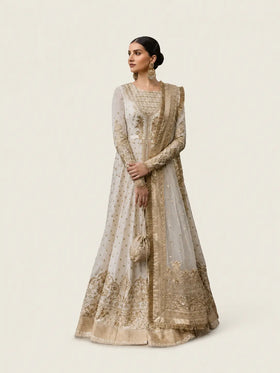
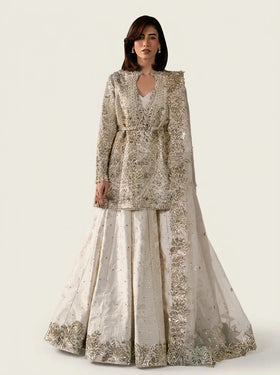
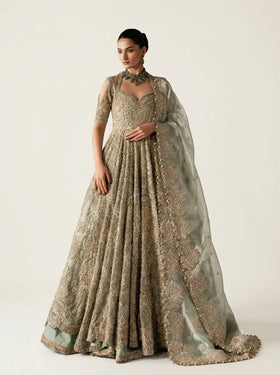
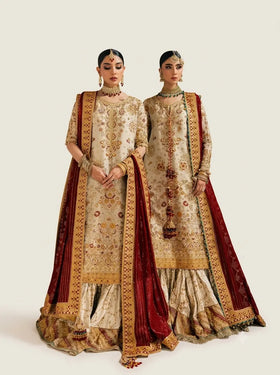
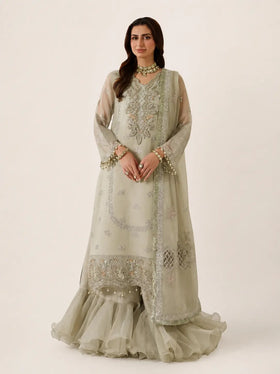
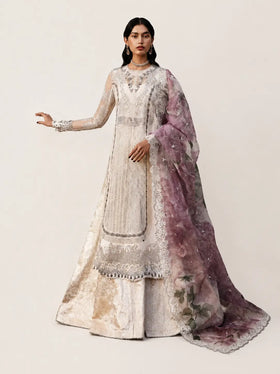
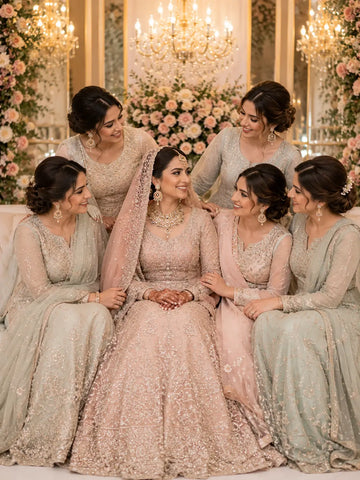
In Pakistani and Indian designer wear, silk is what you reach for when the occasion matters most: the bridal ensemble, the walima outfit, the formal event where the fabric itself is the statement. It has also become an everyday luxury, in a silk-blend kameez or a good silk dupatta. Either way the question is the same. Is it real, and is it good? Two numbers answer that, and most shoppers have never been taught to read them.
Understanding Silk Grades and Momme Weight
Here's the knowledge that separates an informed silk buyer from a hopeful one. Silk quality is defined by two measures — grade (the quality of the raw silk thread) and momme weight (how much silk is actually in the fabric). Learn these two and you can assess any silk listing.
Silk grade: 6A, 5A, and down
Mulberry silk is often sold against a grade that runs from 6A at the top down through 5A, 4A and below, describing the length, uniformity, and cleanliness of the raw fibre. One thing worth knowing: this A-grading is a widely used trade convention, not a single certified international standard, so treat it as a useful directional signal rather than a guaranteed spec. 6A indicates long, strong, uniform fibres with a natural sheen and few defects — the quality used in genuine luxury garments. As the grade falls, fibres shorten, the sheen dulls, and the fabric weakens. Most reputable designer silk sits at 5A or 6A. A piece advertised with no grade at all, at a price that looks too good, is usually telling you something.
Momme weight: the number that matters most
Momme (pronounced "mummy", written mm) is a traditional Japanese weight measure: the weight in momme of a piece of silk 45 inches wide and 100 yards long. The higher the momme, the denser and more durable the fabric. For a rough modern conversion, one momme is about 4.3 g/m², so a 22-momme silk weighs roughly 95 g/m². You don't need the maths — but when a listing states a momme figure, you now know it's a real, physical measurement rather than marketing. Here's how to read the range:
| Momme | Weight & feel | Typical use in South Asian wear | Quality signal |
|---|---|---|---|
| 8–12 mm | Light, sheer, delicate | Chiffon and lightweight dupattas, sheer overlays | Light — correct for sheers |
| 13–18 mm | Medium, fluid drape | Charmeuse kameez, silk sarees, blouses | Good everyday luxury |
| 19–25 mm | Substantial, luxurious, opaque | Formal shalwar kameez, bridal pieces, heavy sarees | Ideal luxury range |
| 26 mm+ | Heavy, structured | Raw silk / dupion suits, structured bridal | Premium / structured |
If you take a single figure away from this guide, make it this: 19–25 momme is the sweet spot for luxury garments, and around 22 momme is the best all-round balance of durability and drape. It's heavy enough to hang beautifully and last for years, without tipping into stiffness. When a product page actually states the momme, that's a good sign in itself. Vague listings are usually vague for a reason. If it isn't listed and it matters to you, ask before you buy.
Because we hold stock physically, I can weigh it. Over the Autumn 2026 prep I checked the momme on a sample of silk pieces across our brands, and the spread below is what came back. This is measured data from garments in our warehouse, not figures copied from a supplier sheet and it's the kind of thing you simply can't get from a photograph.
| Piece type (from our stock) | Measured momme range | What it tells you |
|---|---|---|
| Bridal / heavy formal silk | 22–28 mm | Substantial, opaque, built to last and carry heavy work |
| Formal silk kameez / saree |
16–22 mm |
Luxurious drape with everyday resilience |
| Silk chiffon / dupatta | 8–12 mm | Correctly light — sheer by design, not thin by cost-cutting |
The Seven Silk Types in South Asian Fashion
"Silk" is a category, not a single fabric and the type determines drape, sheen, occasion, and how it wears. Here are the seven you'll meet, and what each is genuinely for.
Charmeuse (Silk Satin)
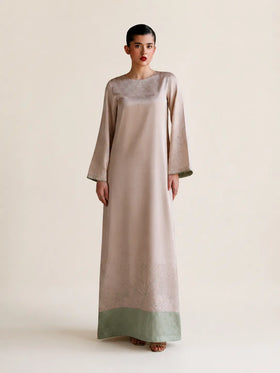
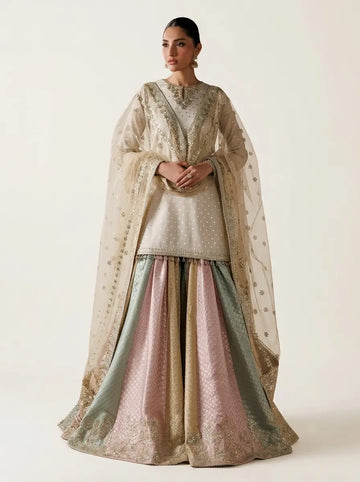
The classic liquid silk — a satin weave with a glossy front and a matte back, famous for its fluid drape and mirror-like sheen. It skims the body and pools beautifully, which makes it a favourite for elegant kameez, saree blouses, and slip-style silhouettes.
Silk Chiffon
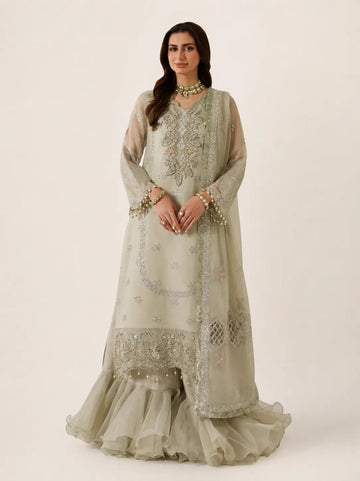
Lightweight, sheer, and softly textured from its tightly twisted yarns. Silk chiffon floats rather than falls, and its low, natural sheen is far more refined than the glassy shine of polyester chiffon. The dupatta fabric par excellence, and a beautiful choice for layered formal pieces.
Silk Organza
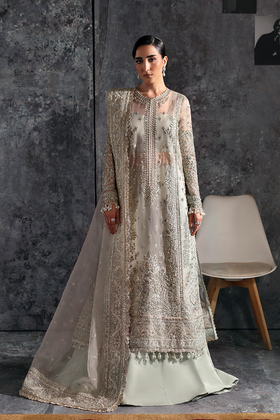
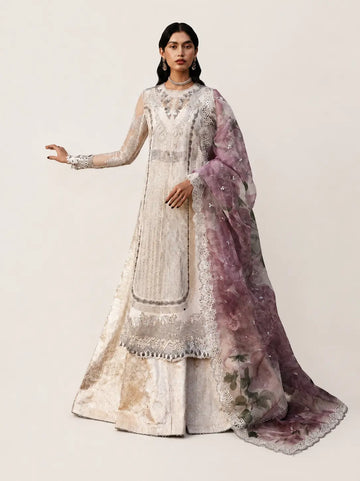
Crisp, sheer, and structured — organza holds its shape where chiffon flows. That architecture makes it ideal for statement dupattas, structured sleeves, and voluminous elements that need to stand rather than drape. It photographs with a beautiful crispness.
Raw Silk
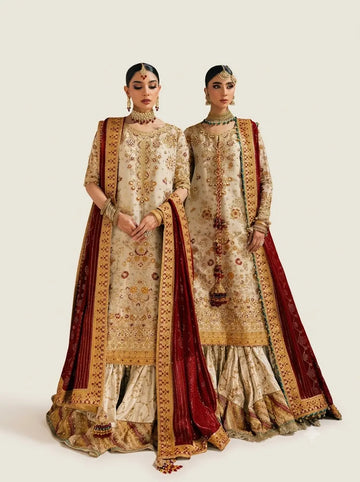
Silk in its most textured, matte form — woven from less-processed fibres, giving it a slightly nubby surface and a substantial, structured hand. Raw silk doesn't shine; it glows quietly, and it holds a tailored shape exceptionally well, which is why it's the fabric of choice for formal suits and structured bridal pieces.
Dupion (Dupioni) Silk
Close cousin to raw silk, dupion is crisp and slightly stiff with a signature irregular slub texture and a beautiful two-tone, iridescent sheen created by weaving different-coloured warp and weft threads. It holds structure brilliantly and catches light in a way that reads unmistakably rich.
Silk Crepe
A silk with a distinctive crinkled, matte, pebbly surface from its highly twisted yarns. Crepe drapes with a fluid weight but without high shine — an understated, sophisticated finish that suits modern, minimalist formal wear and pieces where you want silk's quality without the gloss.
Silk Georgette
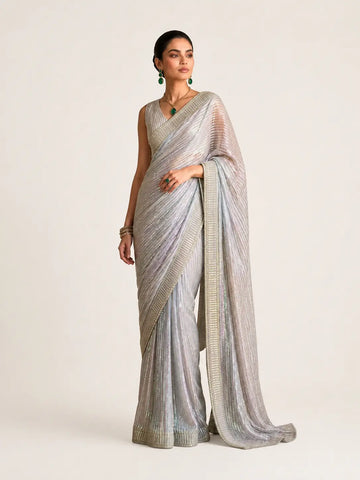
Similar to chiffon but slightly heavier and more opaque, with a fine grainy texture and a matte finish. Georgette has a lovely flowing drape with a touch more body than chiffon, which makes it versatile for sarees, kameez, and flowing dupattas that want movement without full transparency.
How to Identify Authentic Silk: Tests You Can Do at Home
When a silk piece arrives, three simple tests will tell you a great deal about whether it's genuine. None requires equipment; the first two are completely safe, and the third comes with a clear caution.
The touch & warmth test
Run the fabric through your hands. Real silk feels smooth and supple, and warms quickly to your body temperature. Polyester and nylon stay cool no matter how long you hold them, and often feel slightly slippery. One honest caveat: warmth alone rules out those plastics, but not the trickier fakes — viscose, rayon, and acetate (often sold as "art silk") also warm up, because they're processed from plant cellulose. So warmth is a strong first filter against polyester, but pair it with the sheen and burn tests to catch a good cellulose imitation.
The sheen test
Tilt the fabric under light and watch the shine. Genuine silk has a soft, shifting sheen that appears to change colour as the angle moves — a deep, multi-dimensional glow. Synthetic fabric has a flat, white, uniform shine that looks the same from every angle. Real silk's lustre has depth; a synthetic's is one-note.
The burn test — with caution
The most definitive home test, done carefully on a tiny snippet from an inside seam or a spare thread — never on the visible garment. Hold it to a flame and read three things: smell, flame behaviour, and residue. Real silk smells of burning hair, curls away from the flame, self-extinguishes, and leaves a fine brittle ash you can crush to powder. Polyester and nylon smell of burning plastic, shrink from the flame, and melt into a hard bead that can drip. Viscose or rayon "art silk" is the giveaway in between: it burns fast like paper with a smell of burning leaves or wood and leaves a soft, light ash. Do this over a sink or fireproof surface, keep water to hand, and only ever test a spare thread.
Fabric verification is part of the six-point check I run on every piece before it ships, and silk is one where the counterfeits have got genuinely good — a high-quality polyester satin can fool the eye in a photograph. But it can't fool the hand. The warmth test is the one I rely on most: hold the fabric for a few seconds and real silk takes on your body heat while a synthetic stays cool and slick. The second tell is the reverse of any embroidery — on genuine silk the fibre gives slightly around the thread, so the work sits cleanly; on a stiff synthetic base you'll often see puckering. You don't need a lab. You need to know what your hands are telling you.
This is also exactly why buying from stock that's been physically checked matters more for silk than almost any other fabric — the verification has already happened before it reaches you.
Which Silk is Right for you?
| If you want… | Choose | Why |
|---|---|---|
| Bridal, glossy & fluid | Charmeuse | Liquid drape and mirror sheen for the main event |
| Bridal, structured | Dupion | Crisp body and shot-colour sheen that holds shape |
| Formal, matte & understated | Silk crepe or raw silk | Depth without gloss for modern formals |
| A dupatta or sheer overlay | Silk chiffon | Airy, floating, refined low sheen |
| A structured dupatta or sleeves | Silk organza | Holds its shape and photographs crisp |
| Everyday, low-maintenance | Silk-blend | Most of silk's look with easier care and better value |
The Complete Silk Care Guide
Silk rewards correct care with decades of life. The golden rule: when a piece is embellished, structured, or precious, dry clean it — don't gamble. For unembellished, everyday silk, gentle hand washing is possible if you follow the method exactly.
Hand washing (unembellished silk only)
Cool water, gentle detergent
Fill a basin with cool water — never hot, which shrinks silk and sets stains — and add a few drops of a detergent formulated for silk or delicates. Never use regular detergent or anything with enzymes or bleach.
Submerge and swish gently
Press the garment into the water and swish softly for a few minutes. Never rub, scrub, wring, or twist — silk is weakest when wet, and mechanical stress damages the fibres and the sheen permanently.
Rinse cool
Drain and rinse in clean cool water until no detergent remains. A tablespoon of white vinegar in the rinse helps restore lustre and remove soap residue.
Towel, never wring
Lay the piece flat on a clean dry towel, roll it up to absorb the water, and press gently. Wringing distorts the weave for good.
Dry flat, out of the sun
Lay flat away from direct sunlight and any heat source — sunlight fades silk's dye and weakens the fibre. Never tumble dry, and never hang heavy wet silk, which stretches it out of shape.
Ironing
Iron silk on the lowest heat setting, while the fabric is still slightly damp, always on the reverse side, and always with a pressing cloth between the iron and the silk to prevent shine marks and scorching. Never use steam bursts directly on dry silk, which can water-spot it. For embellished pieces, steam from the reverse with a handheld steamer instead, keeping the head away from beadwork.
Storage
Store silk in a breathable cotton garment bag never plastic, which traps moisture and yellows the fabric over time. Keep it somewhere cool, dark, and dry, away from direct light. For heavily embellished pieces, store flat with acid-free tissue between folds so the weight of the work doesn't stress the fabric or the seams. And rotate the silk pieces you wear often, giving the fibres time to rest and recover their shape.
UK-Specific Silk Care: Hard Water & a Damp Climate
Most silk-care advice is written for nowhere in particular. But if you're wearing and storing luxury silk in Britain, two local factors genuinely affect your garments and almost no brand tells you about them.
Around 60% of England sits in a hard or very hard water area — most of the South East, London, East Anglia, and the Midlands — and the dissolved calcium and magnesium can leave dulling deposits on silk and blunt gentle detergents. If you're hand washing silk in a hard-water area, use distilled or filtered water for the final rinse. It stops mineral residue building up over repeated washes and keeps the sheen from going flat. Not sure about your area? Your water supplier publishes its hardness by postcode, and the limescale round your kettle is a fair clue.
The British damp is silk's quiet enemy — persistent humidity encourages mildew and yellowing in stored garments, particularly anything put away after an event without cleaning. Store silk somewhere with air circulation, never a damp loft, cellar, or against an external wall that gets condensation. A breathable cotton garment bag (never plastic) lets the fabric breathe. For long storage, silica gel sachets in the wardrobe help control moisture — just don't let them touch the fabric directly. And always have a piece cleaned before storing it for a season, because invisible sweat and food residues oxidise and darken in storage, and damp accelerates it.
Most high-street cleaners don't routinely handle embellished South Asian silk, so find one that does before you have an emergency. Ask three things: do they hand-finish embellished areas, what process do they use on heavy zardozi or beadwork, and where do they stand if there's colour bleeding or embellishment loss. On cost, set expectations realistically — specialist cleaning of an embellished South Asian outfit in the UK typically runs from around £20–£40 for a formal piece and can reach £70–£150+ for a heavily worked bridal outfit, well above a standard high-street dry-clean. That gap is exactly why gentle at-home care of unembellished silk, and correct storage, saves real money over a garment's life. Local South Asian community groups are the fastest route to a name people actually trust.
Designer Silk at Libayah: What You're Paying For
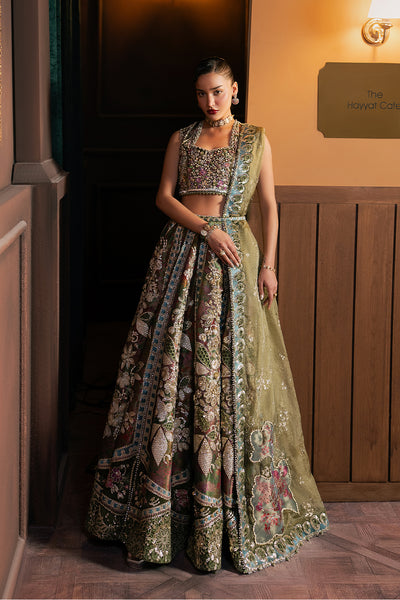
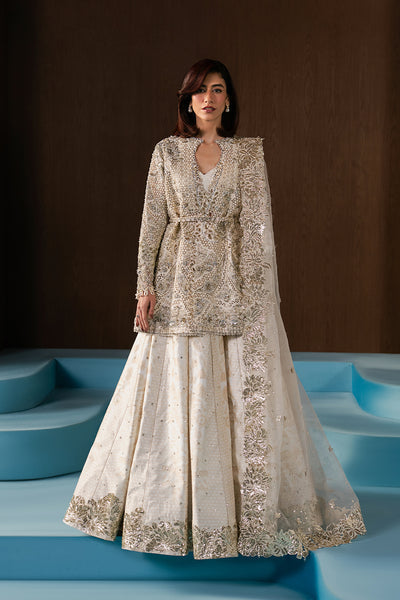
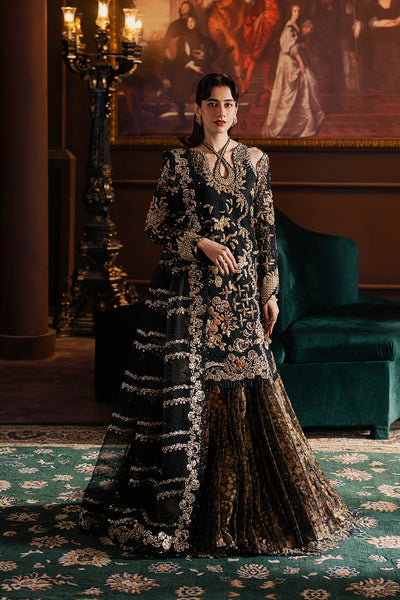
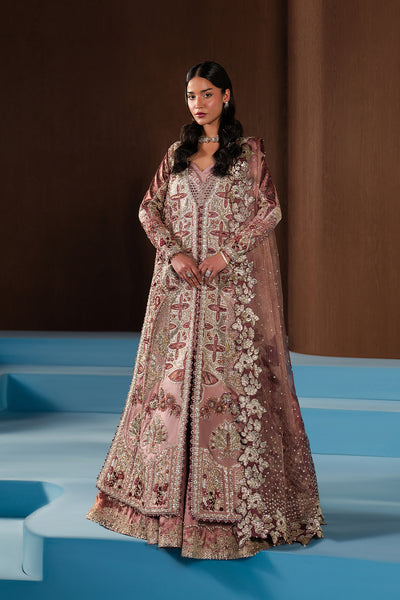
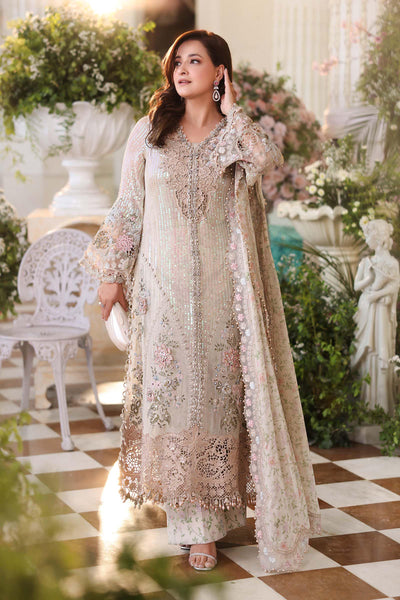
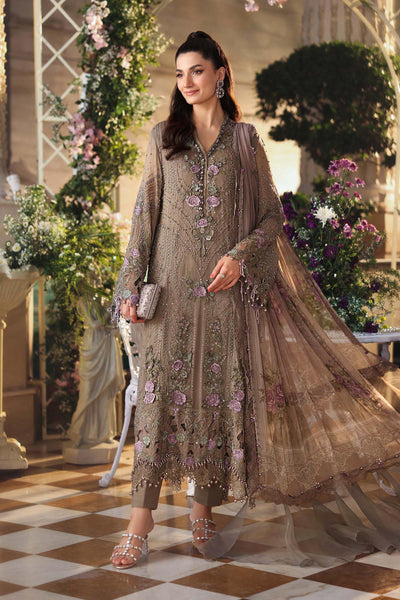
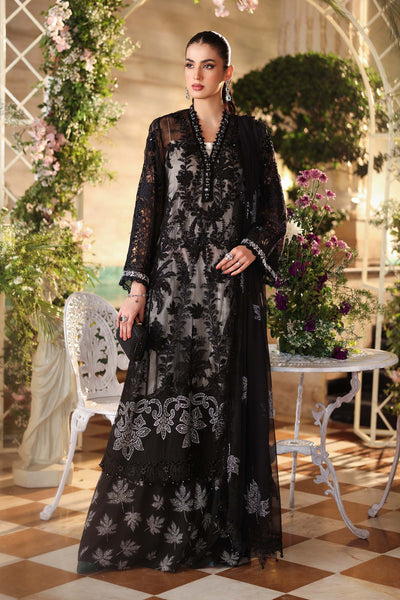
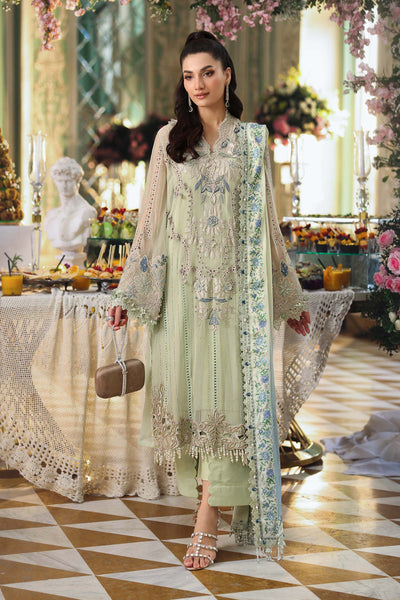
Once you can read grade, momme, and type, designer silk stops being a leap of faith and becomes a considered purchase. Here's how silk shows up across some of the designers we hold in UK stock — and why the fabric justifies the investment.
Maria B — Silk Formals
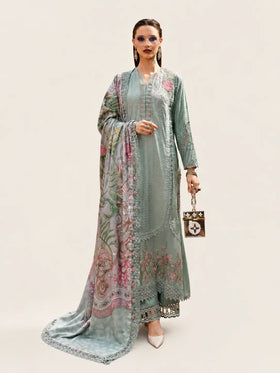
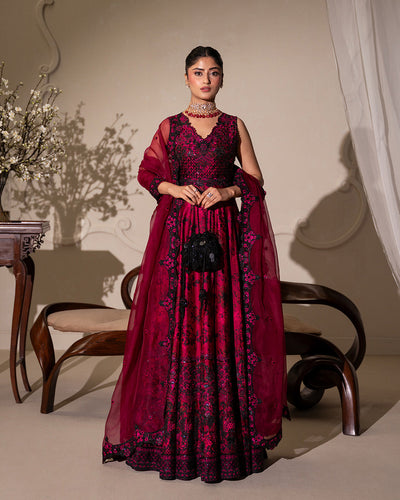
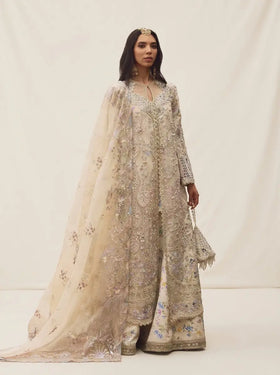
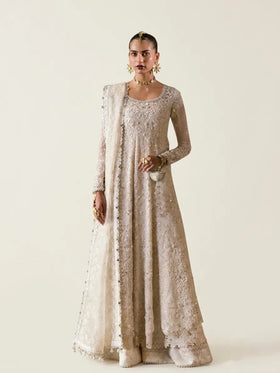
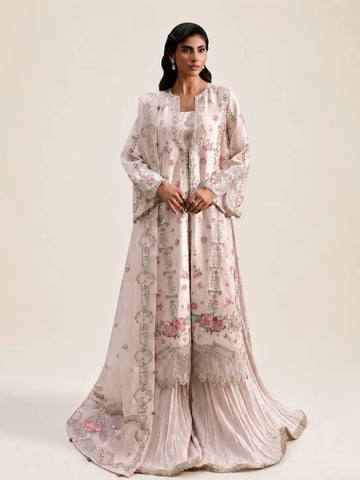
Maria B's formal and luxury lines use substantial silks that carry dense embellishment without sagging. In our stock the silk formal pieces sit at measured momme, 19–22 mm, with prices from £92. Look for the backing behind the handwork — that's what stops heavy work dragging the fabric.
Suffuse — Luxury Pret Silk
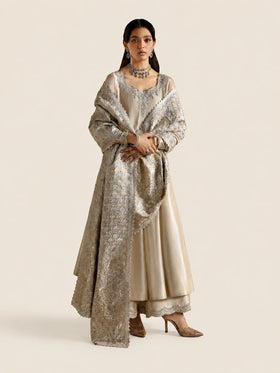
Suffuse works in a luxe-pret register where silk's drape and colour depth do the talking — typically Silk Pret summer 2026 and Silk Pret Fall 2025 in our stock, from £138. Fluid silks that photograph richly and wear elegantly for formal and evening occasions.
Akbar Aslam — Raw Silk Suits
Akbar Aslam's structured formals are a natural home for raw and dupion silks — the crisp, matte, textured hand that holds a tailored silhouette. In our stock these run from £94; the fabric's body is what gives the suiting its architecture.
Raw Silk & Bridal Silk
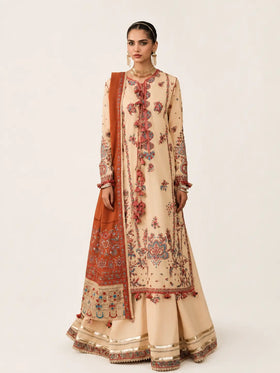
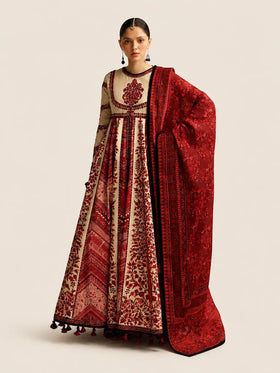
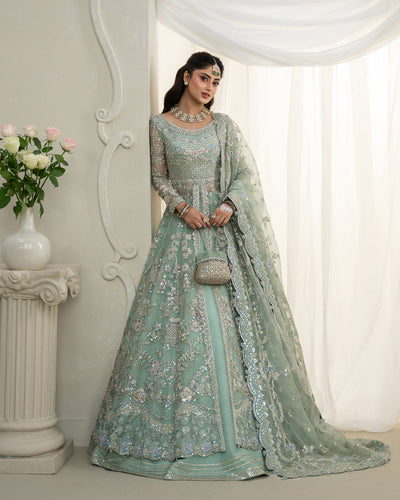
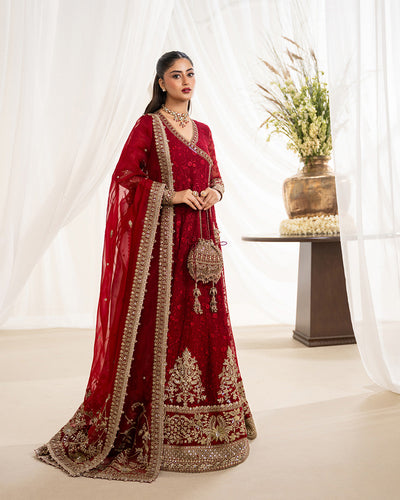
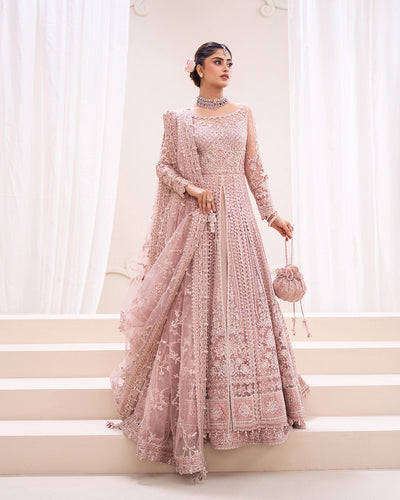
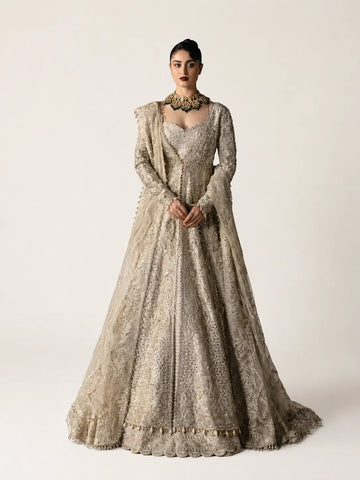
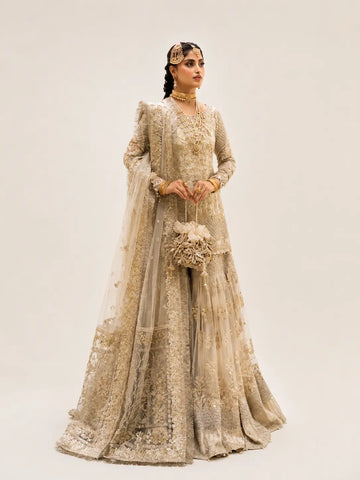
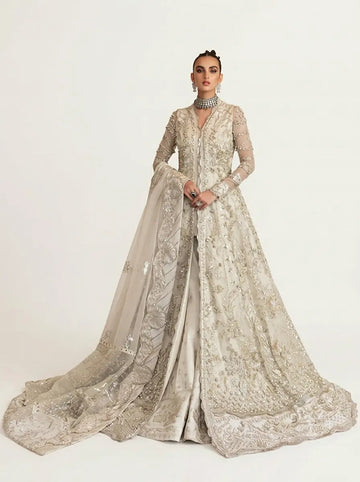
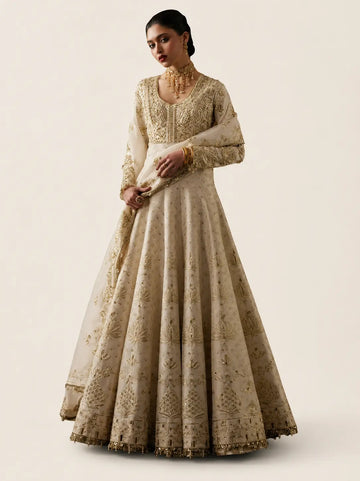
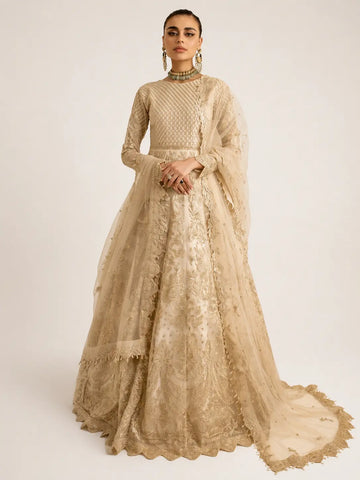
Across the bridal and raw-silk collections the heaviest momme weights come into their own — structured lehengas and formal suits, from £94, where the fabric's substance is part of the presence and the piece is built to become an heirloom.
Shop authentic luxury silk, held in the UK
Every piece verified before dispatch, priced in GBP with no customs, free UK delivery, and free custom stitching to your measurements.
Browse the Silk Collection →Luxury Silk FAQs
Is the same silk used for sarees and shalwar kameez?
How can I tell if silk is real when shopping online?
Can I hand wash silk, or must it be dry cleaned?
What's the difference between raw silk and dupion silk?
Does silk shrink or lose colour?
How do I get sweat or deodorant marks out of silk?
Is silk-blend fabric worth buying, or only pure silk?